
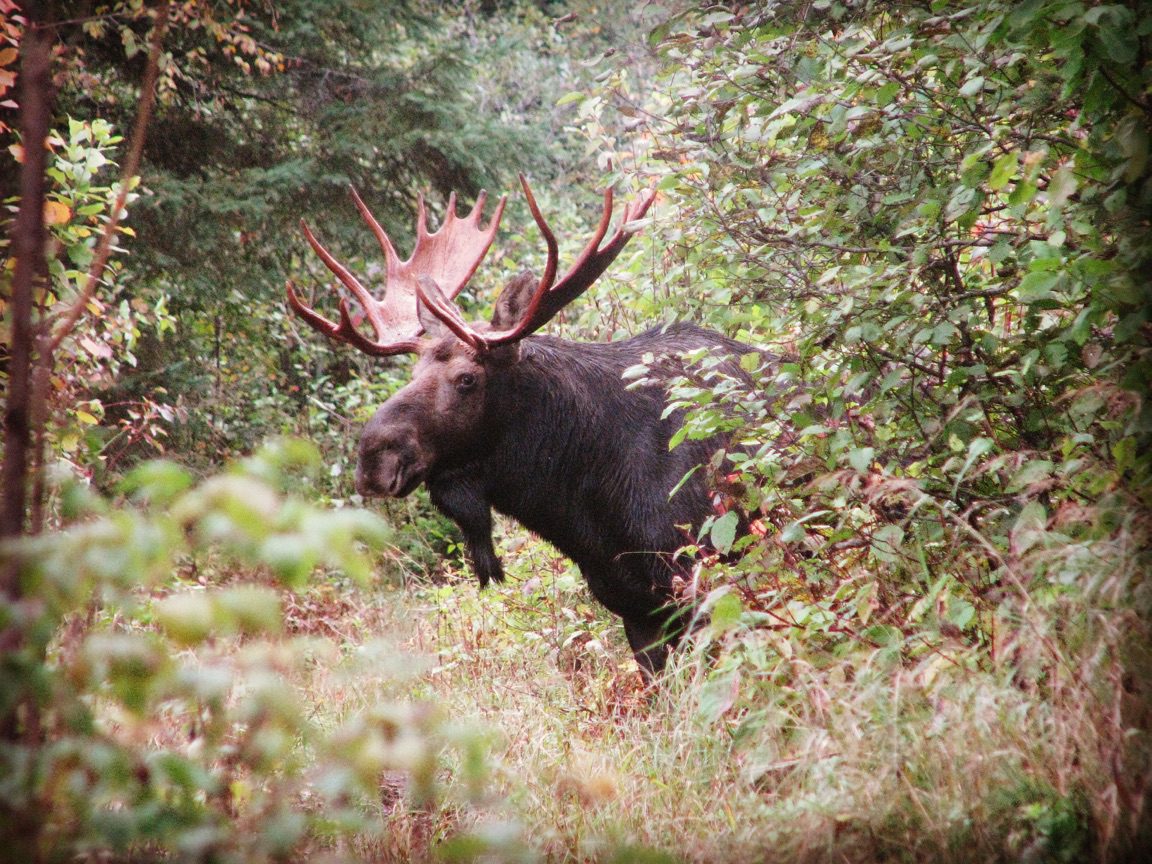
The U.P. Moose Mystery: The DNR Is Halfway Through Figuring Out Why the Herd Won’t Grow
Ask anyone who’s driven a back road in the western U.P. at dusk and they’ll tell you: seeing a moose up here still feels like winning something. This week, TV6 (WLUC) reporter Joe Smith covered a presentation by Michigan DNR wildlife biologist Tiffany Bougie, who shared the first findings from a multi-year study into why the Upper Peninsula’s moose herd has barely grown in a decade.
Here’s the backstory. Moose were airlifted into the western U.P. in the 1980s, and the hope back then was a herd of about 1,000 animals by the year 2000. That never happened. According to the DNR, the population has grown only 1% to 2% over the past decade, sitting around 400 animals for years, and the most recent survey came in closer to 300.
What researchers have found so far
The study started in 2025 and is a partnership between the DNR, the Keweenaw Bay Indian Community and Northern Michigan University. Researchers are using GPS collars, drones and field work to track moose health, reproduction, movement and deaths.
The surprise after two seasons: adult survival looks pretty good, and so does calf survival. In Bougie’s words, the problem with population growth “doesn’t seem to be reproduction.” She was careful to say they’re not sure yet, since some of the data points in different directions. The project has two more years to run, and the DNR plans to use what it learns to shape how state forests are managed for moose.
Why we care, from right here in the Copper Country
We get asked by guests all the time where they can see a moose. The honest answer is that it’s a matter of luck, and this study is a good reminder of why. With a few hundred animals spread across a big chunk of forest, a sighting is a gift, not a guarantee. That’s part of what makes it special.
A few things we’d pass along to anyone staying with us: slow down on rural roads around dawn and dusk, when moose and deer are most likely to be crossing. If you do see one, give it plenty of room and enjoy it from the car. And if you’re set on seeing moose, Isle Royale National Park, reached by boat or seaplane from Houghton and Copper Harbor in the summer season, has its own well-studied herd.
We also like that this research is a local effort, with the Keweenaw Bay Indian Community and NMU working alongside the DNR. Two more years of data should give a much clearer picture, and we’ll be watching for the final results.
Read the full story from TV6 at uppermichiganssource.com.
Planning a trip up to see the wild side of the U.P.? Our cabins and lodges around Houghton County put you close to the forests, lakes and back roads. Book direct at vaultventures.co for our best rates.